AVIS Project Update: Second pilot on the Danube complted! Discover results here!
Guadalquivir pilot results
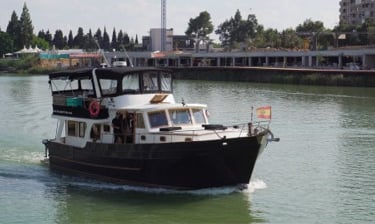
In March, the AVIS project passed a critical threshold. What had until then existed primarily as studies, technical designs, and simulations was tested for the first time in real navigation conditions. Between 9 and 13 March, the AVIS prototype was deployed onboard a vessel operating at the Port of Seville, navigating the Guadalquivir River and putting the system to the test in a live operational environment.
This first pilot represented a decisive step for AVIS. Inland waterways are complex and dynamic environments, where positioning accuracy, integrity, and timely alerts are essential for safe and efficient navigation. The objective in Seville was clear: to evaluate whether the full AVIS system could perform reliably when exposed to real traffic, real manoeuvres, and real operational constraints.
Putting the AVIS system to work
During the pilot, the complete AVIS setup was installed and operated onboard. This included GNSS‑based positioning, integrity monitoring functions, and Copernicus‑based services, all integrated directly with the vessel’s onboard navigation systems.
Rather than testing components in isolation, the Seville campaign focused on system‑level performance. The AVIS prototype was used continuously during navigation, allowing the crew to interact with the system as they would in an operational context. This integration was a key aspect of the pilot, ensuring that AVIS outputs could be directly visualised and interpreted through existing onboard interfaces.
Performance in real navigation conditions
Throughout the pilot, both GNSS and Copernicus equipment operated continuously and reliably. The ASGARD receivers provided uninterrupted positioning and integrity information over the entire campaign, with one of the receivers also delivering OSNMA data alongside standard positioning outputs.
One of the most significant outcomes of the pilot was the observed Protection Levels. These remained sufficiently small to be operationally useful in the inland waterway context, supporting real navigation decisions. This performance was positively assessed by the vessel’s master, highlighting the practical relevance of AVIS outputs beyond purely technical metrics.
To further assess system behaviour, specific situations were deliberately introduced during the pilot. When the vessel was intentionally taken outside the navigable area, alerts were triggered correctly, demonstrating the effectiveness of AVIS monitoring functions. In parallel, Copernicus‑based alerts were delivered in advance and could be actively used during navigation, reinforcing their value as an additional source of situational awareness.
Seamless integration onboard
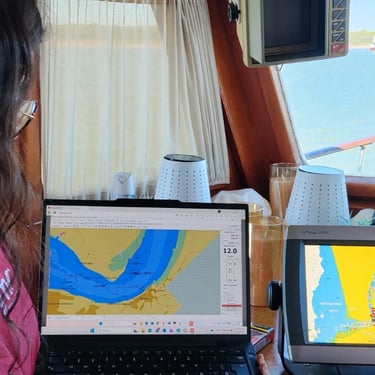
The pilot also confirmed the smooth integration of AVIS with onboard software and displays. The Tresco onboard software functioned as expected, with the ECDIS system successfully receiving inputs from the AVIS prototype. Protection Levels were displayed clearly on screen, allowing the crew to interpret integrity information directly within their usual navigation environment.
This aspect is particularly important for future operational uptake. By fitting naturally within existing onboard workflows, AVIS reduces the cognitive and technical barriers that often accompany the introduction of advanced navigation services.
A milestone for inland waterway navigation
The successful completion of the Seville pilot marks a turning point for the AVIS project. It demonstrates that the concept can move beyond theoretical validation into real operational use on inland waterways. The results obtained during this first campaign provide a strong foundation for further pilots, refinements, and broader validation activities.
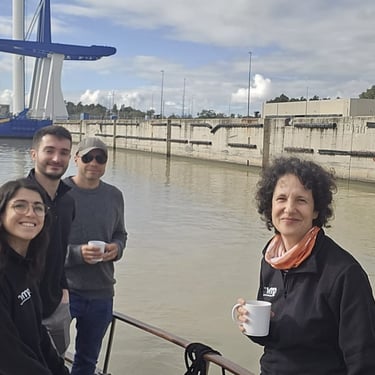
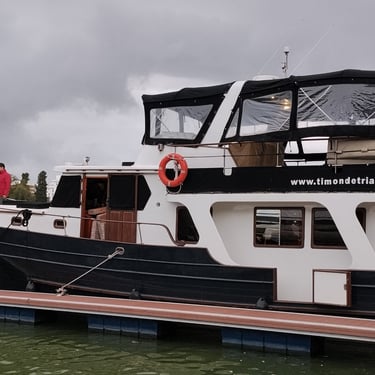
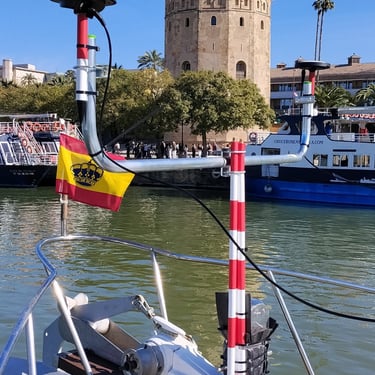
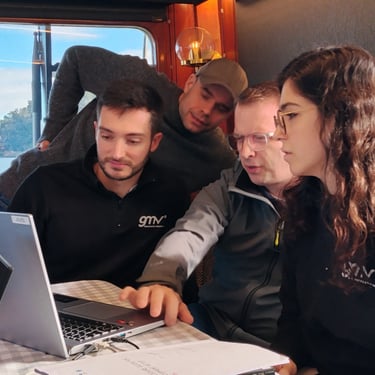
The images below offer a closer look at the pilot in Seville and provide an insight into how the AVIS prototype performed during real navigation scenarios on the Guadalquivir River. As the project advances, additional pilots will build on this experience, expanding AVIS validation across new environments and operational contexts.